<br />
<b>Warning</b>:  "continue" targeting switch is equivalent to "break". Did you mean to use "continue 2"? in <b>/home/goldmnqi/gmdetectors.com/wp-content/plugins/revslider/includes/operations.class.php</b> on line <b>2854</b><br />
<br />
<b>Warning</b>:  "continue" targeting switch is equivalent to "break". Did you mean to use "continue 2"? in <b>/home/goldmnqi/gmdetectors.com/wp-content/plugins/revslider/includes/operations.class.php</b> on line <b>2858</b><br />
<br />
<b>Warning</b>:  "continue" targeting switch is equivalent to "break". Did you mean to use "continue 2"? in <b>/home/goldmnqi/gmdetectors.com/wp-content/plugins/revslider/includes/output.class.php</b> on line <b>3708</b><br />
<br />
<b>Deprecated</b>:  Unparenthesized `a ? b : c ? d : e` is deprecated. Use either `(a ? b : c) ? d : e` or `a ? b : (c ? d : e)` in <b>/home/goldmnqi/gmdetectors.com/wp-content/plugins/js_composer/include/classes/editors/class-vc-frontend-editor.php</b> on line <b>646</b><br />
<?xml version="1.0" encoding="UTF-8"?><rss version="2.0"
	xmlns:content="http://purl.org/rss/1.0/modules/content/"
	xmlns:wfw="http://wellformedweb.org/CommentAPI/"
	xmlns:dc="http://purl.org/dc/elements/1.1/"
	xmlns:atom="http://www.w3.org/2005/Atom"
	xmlns:sy="http://purl.org/rss/1.0/modules/syndication/"
	xmlns:slash="http://purl.org/rss/1.0/modules/slash/"
	>

<channel>
	<title>Gold Master</title>
	<atom:link href="https://www.gmdetectors.com/en/feed/" rel="self" type="application/rss+xml" />
	<link>https://www.gmdetectors.com/en/</link>
	<description>Best ever!</description>
	<lastBuildDate>Sat, 09 Feb 2019 20:31:51 +0000</lastBuildDate>
	<language>en-US</language>
	<sy:updatePeriod>
	hourly	</sy:updatePeriod>
	<sy:updateFrequency>
	1	</sy:updateFrequency>
	<generator>https://wordpress.org/?v=5.6.19</generator>
	<item>
		<title>Ground Balance</title>
		<link>https://www.gmdetectors.com/en/ground-balance/</link>
					<comments>https://www.gmdetectors.com/en/ground-balance/#respond</comments>
		
		<dc:creator><![CDATA[modeer]]></dc:creator>
		<pubDate>Sun, 30 Dec 2018 12:09:01 +0000</pubDate>
				<category><![CDATA[Metal Detection]]></category>
		<guid isPermaLink="false">http://golddetectordubai.com/?p=97</guid>

					<description><![CDATA[Ground Balance is a variable setting that increases detection depth in mineralised ground...]]></description>
										<content:encoded><![CDATA[<div class="vc_row wpb_row vc_row-fluid mpc-row"><div class="wpb_column vc_column_container vc_col-sm-8 mpc-column" data-column-id="mpc_column-836a876e7d38a28"><div class="vc_column-inner"><div class="wpb_wrapper"><div class="vc_empty_space" style="height: 50px"><span class="vc_empty_space_inner"></span></div>

	<div class="wpb_text_column wpb_content_element ">
		<div class="wpb_wrapper">
			<p><span style="color: #ff0000;"><strong>Ground Balance</strong></span></p>
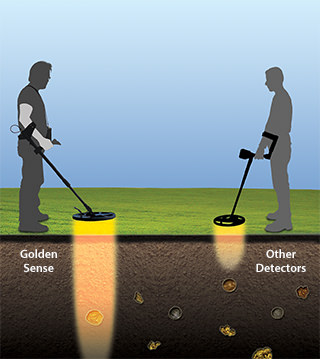
<p>Ground Balance is a variable setting that increases detection depth in mineralised ground. This ground may contain salts, such as in wet beach sand or fine iron particles, such as in red earth. These minerals respond to a detector&rsquo;s transmit field in a similar way that a target does. Due to the much larger mass of the ground compared to a buried target, the effect of mineralisation can easily mask small targets. To correct this the Ground Balance setting removes the responding ground signals, so you clearly hear target signals and are not distracted by ground noise.</p>

		</div>
	</div>
</div></div></div><div class="wpb_column vc_column_container vc_col-sm-4 mpc-column" data-column-id="mpc_column-116a876e7d39a4f"><div class="vc_column-inner"><div class="wpb_wrapper">
	<div class="wpb_single_image wpb_content_element vc_align_left">
		
		<figure class="wpb_wrapper vc_figure">
			<div class="vc_single_image-wrapper   vc_box_border_grey"><img width="320" height="359" src="https://www.gmdetectors.com/wp-content/uploads/2018/12/goldensense_resim01_eng.jpg" class="vc_single_image-img attachment-full" alt="" loading="lazy" srcset="https://www.gmdetectors.com/wp-content/uploads/2018/12/goldensense_resim01_eng.jpg 320w, https://www.gmdetectors.com/wp-content/uploads/2018/12/goldensense_resim01_eng-267x300.jpg 267w" sizes="(max-width: 320px) 100vw, 320px"></div>
		</figure>
	</div>
</div></div></div></div><div class="vc_row wpb_row vc_row-fluid mpc-row"><div class="wpb_column vc_column_container vc_col-sm-12 mpc-column" data-column-id="mpc_column-586a876e7d39fab"><div class="vc_column-inner"><div class="wpb_wrapper">
	<div class="wpb_text_column wpb_content_element ">
		<div class="wpb_wrapper">
			<p><span style="color: #ff0000;"><strong>There are three main types of Ground Balance:</strong></span></p>
<ol>
<li><span style="color: #ff0000;">Manual Ground Balance</span> &ndash; Manually adjust the Ground Balance setting, so the minimum amount of ground signal is heard.</li>
<li><span style="color: #ff0000;">Automatic Ground Balance</span> &ndash; The detector automatically determines the best Ground Balance setting. This is quick, simple and more accurate than a manually set Ground Balance.</li>
<li><span style="color: #ff0000;">Tracking Ground Balance</span> &ndash; The detector continuously adjusts the Ground Balance setting while detecting. This ensures that the Ground Balance setting is always correct.</li>
</ol>
<p><span style="color: #ff0000;"><strong>Frequency</strong></span></p>
<p>The frequency of a metal detector is one of the main characteristics that determines how well targets can be detected. Generally, a single frequency detector that transmits at a high frequency will be more sensitive to small targets and a single frequency detector that transmits at low frequencies will give more depth on large targets</p>
<p><span style="color: #ff0000;"><strong>Discrimination</strong></span></p>
<p>Discrimination is a metal detector&rsquo;s ability to identify buried targets based on conductive and/ or ferrous properties. By accurately identifying a buried target you can decide to dig it up or consider it as junk and continue searching.</p>
<p><span style="color: #ff0000;">There are four main types of discrimination:</span></p>
<ol>
<li><span style="color: #ff0000;">Variable discrimination</span> &ndash; The simplest type of discrimination which uses a control knob to adjust the level of discrimination.</li>
<li><span style="color: #ff0000;">Iron Mask/Iron Reject</span> &ndash; Used mostly with gold prospecting detectors to ignore iron junk.</li>
<li><span style="color: #ff0000;">Notch discrimination</span> &ndash; Allows specific target types to be accepted or rejected.</li>
<li><span style="color: #ff0000;">Smartfind</span> &ndash; The most advanced form of discrimination. Target IDs are plotted based on both ferrous and conductive properties on a two dimensional (2D) display. Individual segments or larger areas of the display can be shaded to reject unwanted targets.</li>
</ol>

		</div>
	</div>
</div></div></div></div>
]]></content:encoded>
					
					<wfw:commentRss>https://www.gmdetectors.com/en/ground-balance/feed/</wfw:commentRss>
			<slash:comments>0</slash:comments>
		
		
			</item>
		<item>
		<title>Key Detecting Concepts Explained</title>
		<link>https://www.gmdetectors.com/en/key-detecting-concepts-explained/</link>
					<comments>https://www.gmdetectors.com/en/key-detecting-concepts-explained/#respond</comments>
		
		<dc:creator><![CDATA[modeer]]></dc:creator>
		<pubDate>Sun, 30 Dec 2018 12:08:10 +0000</pubDate>
				<category><![CDATA[Metal Detection]]></category>
		<guid isPermaLink="false">http://golddetectordubai.com/?p=98</guid>

					<description><![CDATA[Whether you’re prospecting for gold, hunting for ancient coins or scuba diving for sunken treasure...]]></description>
										<content:encoded><![CDATA[<div class="vc_row wpb_row vc_row-fluid mpc-row"><div class="wpb_column vc_column_container vc_col-sm-6 mpc-column" data-column-id="mpc_column-156a876e7d3adc2"><div class="vc_column-inner"><div class="wpb_wrapper"><div class="vc_empty_space" style="height: 50px"><span class="vc_empty_space_inner"></span></div>

	<div class="wpb_text_column wpb_content_element ">
		<div class="wpb_wrapper">
			<p><span style="color: #ff0000;"><strong>Key Detecting Concepts Explained</strong></span></p>
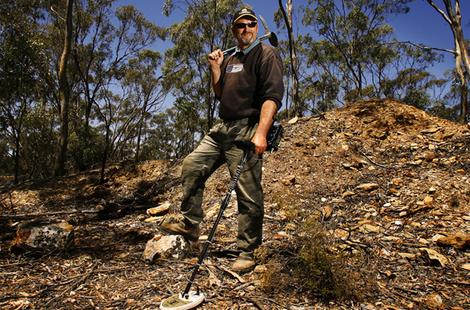
<p>Whether you&rsquo;re prospecting for gold, hunting for ancient coins or scuba diving for sunken treasure, there are some basic metal detecting concepts and terms that are common to all forms of metal detecting. Understanding how these definitions apply to your type of detecting will improve your success.</p>

		</div>
	</div>
</div></div></div><div class="wpb_column vc_column_container vc_col-sm-6 mpc-column" data-column-id="mpc_column-556a876e7d3b4af"><div class="vc_column-inner"><div class="wpb_wrapper">
	<div class="wpb_single_image wpb_content_element vc_align_right">
		
		<figure class="wpb_wrapper vc_figure">
			<div class="vc_single_image-wrapper   vc_box_border_grey"><img width="470" height="310" src="https://www.gmdetectors.com/wp-content/uploads/2018/12/metal-detector-gold.jpg" class="vc_single_image-img attachment-full" alt="" loading="lazy" srcset="https://www.gmdetectors.com/wp-content/uploads/2018/12/metal-detector-gold.jpg 470w, https://www.gmdetectors.com/wp-content/uploads/2018/12/metal-detector-gold-300x198.jpg 300w" sizes="(max-width: 470px) 100vw, 470px"></div>
		</figure>
	</div>
</div></div></div></div><div class="vc_row wpb_row vc_row-fluid mpc-row"><div class="wpb_column vc_column_container vc_col-sm-12 mpc-column" data-column-id="mpc_column-776a876e7d3b8b1"><div class="vc_column-inner"><div class="wpb_wrapper">
	<div class="wpb_text_column wpb_content_element ">
		<div class="wpb_wrapper">
			<p><strong><span style="color: #ff0000;">Detection Depth Factors</span> </strong></p>
<p>The most common question about metal detectors is &lsquo;How deep do they go?&rsquo; The answer is not as simple as you might think and usually starts with &lsquo;It depends&hellip;&rsquo;&nbsp; The depth that a metal detector can detect a target depends on a number of factors:</p>
<ol>
<li><span style="color: #ff0000;"><strong> Ground mineralisation</strong></span></li>
</ol>
<p>A target in low mineralised ground can be detected deeper than a target in highly mineralised ground. The level of ground mineralisation has a significant influence on detection depth.</p>
<ol start="2">
<li><span style="color: #ff0000;"><strong> Target</strong></span></li>
</ol>
<p>Size Large targets can be detected deeper than small targets.</p>
<ol start="3">
<li><span style="color: #ff0000;"><strong> Target </strong></span></li>
</ol>
<p>Shape Circular shapes like coins and rings can be detected deeper than long thin shapes like nails.</p>
<ol start="4">
<li><span style="color: #ff0000;"><strong> Target orientation</strong></span></li>
</ol>
<p>A horizontal coin (e.g. lying flat) can be detected deeper than a vertical coin (e.g. on edge).</p>
<ol start="5">
<li><span style="color: #ff0000;"><strong> Target material</strong></span></li>
</ol>
<p>High conductive metals (e.g. silver) can be detected deeper than low conductive metals (e.g. lead).</p>

		</div>
	</div>
</div></div></div></div>
]]></content:encoded>
					
					<wfw:commentRss>https://www.gmdetectors.com/en/key-detecting-concepts-explained/feed/</wfw:commentRss>
			<slash:comments>0</slash:comments>
		
		
			</item>
		<item>
		<title>How to Detect Gold?</title>
		<link>https://www.gmdetectors.com/en/how-to-detect-gold/</link>
					<comments>https://www.gmdetectors.com/en/how-to-detect-gold/#comments</comments>
		
		<dc:creator><![CDATA[modeer]]></dc:creator>
		<pubDate>Thu, 27 Dec 2018 14:44:04 +0000</pubDate>
				<category><![CDATA[Metal Detection]]></category>
		<guid isPermaLink="false">http://golddetectordubai.com/?p=1</guid>

					<description><![CDATA[Metal detectors work by transmitting an electromagnetic field from the search coil into the ground...]]></description>
										<content:encoded><![CDATA[<div class="vc_row wpb_row vc_row-fluid mpc-row"><div class="wpb_column vc_column_container vc_col-sm-6 mpc-column" data-column-id="mpc_column-316a876e7d3c473"><div class="vc_column-inner"><div class="wpb_wrapper">
	<div class="wpb_text_column wpb_content_element ">
		<div class="wpb_wrapper">
			<p><strong><span style="color: #ff0000;">How Do Metal Detectors Work?</span> </strong></p>
<p>Metal detectors work by transmitting an electromagnetic field from the search coil into the ground. Any metal objects (targets) within the electromagnetic field will become energized and retransmit an electromagnetic field of their own. The detector&rsquo;s search coil receives the retransmitted field and alerts the user by producing a target response.</p>
<ol>
<li><span style="color: #ff0000;">Battery</span> The battery provides power to the detector.</li>
<li><span style="color: #ff0000;">Control Box</span> The control box contains the detector&rsquo;s electronics. This is where the transmit signal is generated and the receive signal is processed and converted into a target response.</li>
<li><span style="color: #ff0000;">Search Coil</span> The detector&rsquo;s search coil transmits the electromagnetic field into the ground and receives the return electromagnetic field from a target.</li>
<li><span style="color: #ff0000;">Transmit Electromagnetic Field</span> The transmit electromagnetic field energises targets to enable them to be detected.</li>
<li><span style="color: #ff0000;">Target</span> A target is any metal object that can be detected by a metal detector. In this example, the detected target is treasure, which is a good (accepted) target.</li>
<li><span style="color: #ff0000;">Unwanted Target</span> Unwanted targets are generally ferrous (attracted to a magnet,) such as nails, but can also be non-ferrous, such as bottle tops. If the metal detector is set to reject unwanted targets then a target response will not be produced for those targets.</li>
<li><span style="color: #ff0000;">Receive Electromagnetic Field</span> The receive electromagnetic field is generated from energised targets and is received by the search coil.</li>
<li><span style="color: #ff0000;">Target Response</span> When a good (accepted) target is detected the metal detector will produce an audible response, such as a beep or change in tone. Many Minelab detectors also provide a visual display of target information .</li>
</ol>

		</div>
	</div>
</div></div></div><div class="wpb_column vc_column_container vc_col-sm-6 mpc-column" data-column-id="mpc_column-486a876e7d3cb12"><div class="vc_column-inner"><div class="wpb_wrapper">
	<div class="wpb_single_image wpb_content_element vc_align_right">
		
		<figure class="wpb_wrapper vc_figure">
			<div class="vc_single_image-wrapper   vc_box_border_grey"><img width="427" height="852" src="https://www.gmdetectors.com/wp-content/uploads/2018/12/1-1.jpg" class="vc_single_image-img attachment-full" alt="" loading="lazy" srcset="https://www.gmdetectors.com/wp-content/uploads/2018/12/1-1.jpg 427w, https://www.gmdetectors.com/wp-content/uploads/2018/12/1-1-150x300.jpg 150w" sizes="(max-width: 427px) 100vw, 427px"></div>
		</figure>
	</div>
</div></div></div></div>
]]></content:encoded>
					
					<wfw:commentRss>https://www.gmdetectors.com/en/how-to-detect-gold/feed/</wfw:commentRss>
			<slash:comments>1</slash:comments>
		
		
			</item>
	</channel>
</rss>